 RSS Feed
 Twitter


Recently I came across a great compilation album of Irish artists. It was interesting to note all the great Irish bands that for one reason or another are no longer big players of the music scene. Bands such as Candy Apple Red, The Coletranes, An Emotional Fish, Energy Orchard, Shaine and Peach all sounding brilliant and essential.As Jack Welch would say a murderers row of talent. Just to say Thank You for the Music.
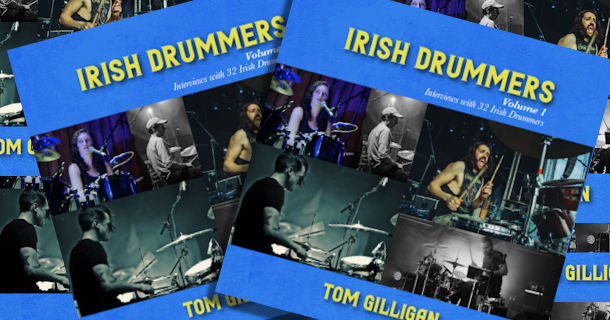
Order Irish Drummers: Volume 1
Irish Drummers is an insightful publication into the people behind the drum set. A joy for any music enthusiast (and everyone else).
Welcome to Irish Drummers
This site exists is to showcase the talent and creativity of Irish drummers through the years. The great contribution that this band of musicians have made to Irish culture and music throughout the world.
Welcome to Irish Drummers
This site exists is to showcase the talent and creativity of Irish drummers through the years. The great contribution that this band of musicians have made to Irish culture and music throughout the world.
Sunday, 22 May 2016
Thursday, 30 July 2015
So much for the summer. It’s
the 9th of August 2014, I’m driving through Limerick City and I can
honestly say I haven’t seen a downpour like it in years. It’s that bad that the
wipers on my car can barely handle the torrent of water cascading from the
heavens. Normally, I wouldn’t be out in weather like this, but I’m on my way to
interview a certain Irish drummer that is playing with the legendary Irish
band, Horslips. As I’m sitting in my car, outside Dolan’s, waiting for the rain
to subside I’m really looking forward to interviewing one of the most respected
and talented drummers that this small island of ours has produced and that is
Mr. Ray Fean.
Tom; How
did you get started?
Ray; I always had a deep passion for music. I
got started for a number of reasons, traditional Irish music. I love music. My
brother John played in Horslips. I had in effect music around me all the time.
Musical household, I naturally equated towards rhythm very easily. As a child I
had no doubt of what I was going to do, I was going to be a drummer.
Tom; Who
were your influences starting off?
Ray; First of all, I was very influenced by
traditional Irish music and its rhythm because the rhythm is in the melody. I
was listening to everybody but I mainly grew up listening to Frank Zappa,
fairly wild stuff, which I thought all the kids were listening to, but of
course they weren’t. It was a very diverse musical household in that respect.
So it was Coltrane, it was Jazz, it was everything.
Tom;
Did your influences change as your career progressed?
Ray; I managed to do with the stuff I started
with, which was an uphill challenge with the idea of listening to, I don’t
know, maybe “Apostrophe” by Frank Zappa and the odd time signatures and stuff
like that. First thing I learned was probably time signature.
Tom; Were
you self taught or did you take drum lessons?
Ray; I taught myself for the most part but I
had the great pleasure of going to Johnny Wadham. Now I was fourteen, I was
smoking, drinking exotic tea. We were listening to the latest Buddy Rich album.
I was taking notation and I just felt like a rock star, it was fantastic.
Tom;
What advice would you give to drummers starting off?
Ray; I’d say it’s hard work, and you better
buckle up. The one thing you’ve got to do is you’ve got to get good at what you
do. I knew I’d have to practise and practise. It’s not easy. You don’t know
exactly where the next gig is. Once again, practise, practise, practise and
you’ll get really good and you should have that to fall back on like when you
go out playing, and you’re sitting there, looking at this, hearing this, you
don’t know when by chance you’ll be asked to do a session. There’s only one
reason that happened and that’s because you’ve practised for it.
Tom; How
much natural talent does someone need?
Ray; I played the bodhrán, I picked up sticks
for the first time, I played it straight away, drums straight away, it was no
problem, I’m a drummer. I was born a drummer and everyone in the household knew
that, but you’ve still got to practise because when you’re a born drummer and
you play, you have to be yourself. You develop something to push yourself out,
lots of things that you need to learn, playing with click tracks and all that
kind of stuff. These are all vital when it comes down to it. I knew what the
road was ahead but I was lucky because I had people around me and that’s why
I’d be glad to bestow any information. It doesn’t matter how natural you are.
To keep your natural stuff you’ve got to work on it. Plus, practice is great
enjoyment, and every professional would recommend it.
Tom;
You’re playing with Horslips now, it’s certainly a great gig, a great band,
when you approach a gig like this, do you go into it and say, I’m going to
listen and replicate what was done before”, or do you say,” well I’m going to
put my own Ray Fean stamp on this sound”?
Ray; That’s a good question because you do
have to listen to what has gone on before because the players that are around that situation are used to something
so consequently when you arrive in and start adding in all these other things
or playing completely differently it kind of upsets the position of the music.
There are reasons for that, the accents that are in place, the very way it was
played, there’s a reason for that as well. So all these reasons are in place
and you have to come to terms with doing that. If you’re in a situation where
you add your own flare, then so be it. Bringing in to Horslips, that’s one mask
or hat, so to speak, and Riverdance, that’s another hat, and Celtic Woman, that’s
another hat and these all react entirely to what you have to do. Do you play
parts so you can style a gig the way you play? You have to be careful how you
style the parts and if you want to try something out and the musician says,
“Ya, give me that”, then great. Coming in with all these big ideas, it doesn’t
work.
Tom; So
when you’re in a session and you’re approaching a song, what’s the thought
process behind deciding what to play?
Ray; The thought process for the actual song
itself, fundamental elements are important and are entirely up to you. It’s
something that you need to listen to. You know what your job of work is, you
know the time signatures. You need to come in to the studio. If you’re
fortunate enough you get a set of ideas of how you would approach this. If the
singer or the producer doesn’t have an idea, then you start giving out the
ideas and this is how you do that. You get inspired by the song, through its
feeling, inspired by the song through its rhythm, even if it’s not anything
other than, let’s say, two up, two down, country. You’ve got to put your heart
into the lyric of it, put your heart into its soul. If you can get far with it,
brilliant. What it comes down to is your feel and understanding, your time
signature, understanding the actual dynamic of what’s needed, like you’re not
driving a thumb tack with a sledge hammer. Do you know what I mean? You don’t
go in to a jazz gig with massive sticks. You feel that and you suss it out. The
way to do that is to listen to what the track is, so you practise your routine
again, like your routine jazz, your routine country, all these
different things. You understand the vernacular and when you get in to the
studio you understand that it’s a country beat and how to play that and you
listen to Larry Londin and you pick up the pieces.
Tom;
Thanks Ray that’s really fascinating. As a matter of interest how many drum kits
do you have?
Ray; I’ve got kits here, kits in the States,
My own personal amount? about six kits.
Tom; If
you were asked to choose songs from your career thus far, that best represent your style and that you're most proud of, what would they be?
Ray; Let’s go from the first album, so “Cut
and Dry”, from Shibumi. There’s a great album I did in Bulgaria, “Rest in Peace”
and we did mad stuff out in Bulgaria but that won’t be heard, unfortunately,
it’ll never get out of Bulgaria. Another one was any of the Coolfin tracks
really. I think after that then playing with Ray Lynam was brilliant. We did a
great album that never got released so that won’t be heard either. “Twisting
and Turning” was a track we did, written by Kieran Goss and that turned out
fantastic and that was my introduction to Donal Lunny, through Ray Lynam. We
all know he was phenomenal. And then I suppose another choice would have to be
from the “Dan Ar Braz” era. That was great. The technicality, I love. I love
its challenge. Being able to make certain progress, to pull it off, so to
speak, but a good song does it for me. I play a really good song. It does it
for me more than anything else. You can listen to crazy drummers who are
fantastic and brilliant, but I find, with me, a good song to listen to is
important.
Tom; When
you listen back to tracks you recorded years ago, do you look on it now and
say, “I wish I had done that differently”? Is there always that kind of
self-analysis that goes on?
Ray; I suppose. First coming out of the
studio after doing takes, breaking down the higher beats and all that kind of
stuff, “Ray, it’s fine, go away”. While I’m in there I’m a terror, it’s awful.
Generally speaking, there have only been a few things that I wish could have
been better but the self-analysis or the analysis, per say, in the studio on
the ground, I have to do that and that’s the time to do it. You can, you know,
if people are happy with the take and it actually is fine, walk away. Don’t
overdo it, because I went through a phase of self-analysis in the studio and it
went on too long. Actually freeing yourself from playing the part, listening to
it, “do we need to fix that?” fixing it, just walk away. It’s an obsession
because that stuff sort of slows you down as a way of life. Sometimes I listen
back to things and say, “oh, that could have been better”, ya absolutely but I
wouldn’t harp on about it, I wouldn’t focus on it because you would drive
yourself crazy.
Tom;
Which do you prefer, playing live or studio?
Ray; I love the wildness of the live thing. I
love the expression of wild but I love the discipline of the studio. I love its
challenge, its achievement. I love its result and the fact that it’s going to
be there forever. Live has its advantages over recorded but a good recording is
a great thing to have achieved and to be part of a team. I love the whole ethos
and everything about it. I love the studio behaviour. It is quite academic but
there’s nothing like nailing it down with a team of people back into the
control room. Big studio rooms when you’re in with everybody, it’s not daunting
at all but I can understand that you’re going in to these halls for the first
time. For any new drummer it can be quite nerve wracking. What I would say
before you go in to that room is that you have that click track with your body,
with your sync, with your motion with everything. You are the click track when
it comes to playing so playing in time is really important, you know.
That’s the one thing that’s going to earn any drummer when you get in to a
studio situation is a click track. If you can’t keep within a click then
everyone else is doing it in line with the click track, so that’s what you have
to practise, that’s where the practise comes in. I know I keep harping back to
practice but it is fundamentally important.
Tom;
How important is it to practise the rudiments?
Ray; Rudimentary for me, I do find it awful
boring. I mean for me, I understand what the importance of it is and I think it
is very important if you don’t have the discipline I think. But with the
rudiments I practise and I still keep practising. It is the flow of how your
body moves, your conversation between your hands and your feet so rudimentary
stuff applies to paradiddles and all that sort of thing. When you’re playing along and you have a flow to a song and that’s
something that you really have to kind of think about because rudiments give
you a certain amount of square aspects to it. There’s no curve in it, you know,
there’s no kind of like if you’re playing rock or you’re playing jazz or
whatever with all the parts going on, the feeling you get when everything is
moving along and you have this kind of chug in your system. Even when you stop
playing you still feel the rhythm. You know, it’s like dancing. It’s like river
dance. It’s like Latin. It’s the flow of the whole thing. That’s my rudiments.
That’s what I think is the most important part of it, as a flow.
Tom; Being
on the road with a band, how do you keep yourself fit and how do you keep your
body in check?
Ray; Discipline. The thing of it is, it’s not
a party, it’s a gig. You know why you’re there and don’t forget it. There are great
times on the road. We love our gig years coming up with Celtic Woman, a night
out and we would have a conversation and we would have a nice bottle of wine, a
meal and we’re all sitting around and we’re talking about everything and we’re
talking about the old days. That’s my love of the outside world but the gig is
the most important thing and you’ve got to keep that bit in mind at all times.
You’re walking out in front of people so there’s no messing with that. Unless
you’re doing your own thing, unless you’re actually making your own music,
you’re out there in the world, employing other people but when you’re employed
as a bass session player or whatever, it’s about discipline absolutely. Be on
time, get out of the hotel on time, you know. It’s not just about the drums,
it’s how you communicate with everybody, like you say what the teamwork is. The
teamwork is down to how you get on with the crew, how you get on with
everybody, you know. You don’t want to be Mr. Nice Guy but Mr. Respect, to have
respect for other people. That’s what lasts, especially where you’re on a bus,
like the last one we did was four and a half months so you better get on with
each other, you know. Generally speaking, it’s been great so far. This place is
great.
Tom; What I’m focusing on with these series of
interviews with Irish drummers is what makes them unique as opposed to other
drummers?
Ray: That’s a good question and you’re
absolutely right. I think it’s to do with our folklore. We’re innately, as a
nation, rhythmic. We have massive background in our tradition including
everything from our arts to our literature. Our music, in particular, it’s very
rhythm based and I think before you even pick up a stick you’re in the Irish
style. You know, once you start drumming, although you might be a rock and roll
drummer at the start as much as I was a rock and roll drummer, the cost of it,
the thing of Irish traditional music around me was rhythm for that. It equates
effectively to what it would be, like Latin America. We have our own Latin
America. We have our own style here and I think we have that fundamental thing.
Some countries don’t do it. We’ve got it in our blood. We have it in our
system. Drumming is, whether you’re singing or you’re dancing, you know, it’s
all rhythm; it’s all about the rhythm all the time. So like I said, once again,
traditional Irish music, the rhythm is in the melody so you hear that
syncopation and you know, you play along to it. So it’s all there, that’s the
melody as well. So I think we have an innate understanding which is great. The
next place we’re going to is Sapporo, so in Brazil. Ya, that’s where Celtic
Woman is off to next, so it will be interesting to see what the Latin Quarter
has to offer.
Tom: How
long has the Celtic Woman series been going for?
Ray: A solid ten years. We’ve done numerous
DVDs and videos, great challenges and some great moments, great memories like,
you know, live gigs. Sorry, the DVDs, it’s always been a challenge, always a
pressure. The pressure is always
there but it’s a fantastic gig.
Tom: It’s
a great achievement. From your own point of view Ray, what’s the next five year
plan, drumming wise, what’s the challenge?
Ray: Well, I’m fifty two in September so what
I would like to do is, I need to get into a room and start really beating the
shit out of it now because as a cardiovascular workout but I would love if it
was like four or five months next after going on a break with Celtic Woman
where I could play my guts out when I did when I was like fourteen, just feel
that right now. It would all be about flash and prowess, delivering and writing
and so but I mean I’m very much a writer now as well. All the Killinaskully
stuff, you know that. That was thirty eight episodes. A lot of songs and stuff
as well and I’ve gone for a publishing deal with it. So there’s a lot of song
stuff going on there but I do want a place when I can just get physically into
it. I want to call to the guys in power, get a kit over soon and I’m going to
start doing it again. I’ll maybe get some clinics out, ya, something like that.
Let’s see how I get on. Ya, that’s next week. Of course it’s the gigs, the
tenth anniversary of Celtic Woman and there’s lots of stuff going on.
Tom: What’s
the future for Irish drumming? You had the 70s, 80s and 90s where things were
progressing. Irish artists are going to find it harder and harder to get out
there now.
Ray: Ya, I know what you mean. Drums were a
part of something. You look at Lizzy, you look at all the different bands,
drums were a very big part of it. You felt part of something. I think in those
eras your contribution was all there. I think it’s still there, it’s just going
through a phase. We’re not seeing it at the minute but having said that,
there’s a technological storm going on here. It’s like a meteorite at the
moment. There’s so much technology, there’s so much computers now. It will find
a street. It will get back eventually. Drumming will always remain the same as
folklore. It will always have its future in that respect. How we react to it is
really down to, well ok, I’ll pitch it like this, if you had the modern kit of
drums, then that would have been used that way. It’s all about what’s in front
of us next. Drums as we know are a fantastic kit. Made, to look at it, they’re
beautifully built; great sounds. I wonder what the next thing to hit is, like
you know, what is it going to be electronics wise, how will people react to
that, but I think it’s very hard to define. It gets remade. Let’s say, like the
great Brian Downey, ya everyone is who they want. Ya, I see your point. I
wonder if all that stuff is going to come back. I don’t know. It’s still there.
I still feel that. It felt like that with Horslips last night. I feel like that
about any gig. You have to be open. Like that flow we were talking about. You
really got to get into what you feel in it. It’s very computerised. There’s
nothing like playing the player, you know, playing the player is it. That’s all
flare. So we’ll see what flare is when it comes to that.
Tom: As
we’re talking about Irish drummers, is there anyone that’s currently coming up
on your radar?
Ray: I’m seeing stuff that I love. I can’t
name names right now, I’m sorry about that. I can see a style coming through in
ways I hope that remains. I’m seeing players that are playing really particular
styles. It’s great, with flash and you know flare and they’re comfortable with
what they’re doing. I would never be worried for the future of Irish drummers,
ever, ever. I think it’s always going to be there. I’m only a cog in all that
system but you know, I believe in it. I believe it’s going to get better in
some ways. We’re not seeing it right now but then again it’s not what it used
to be. You don’t have as many places to play. I think a lot of it is off the
beaten track. Many people are expecting it for free.
Tom; Is
it a case that people don’t appreciate music as much now?
Ray; I think people appreciate it usually but
they just won’t pay for it. It’s down there with all the other things, you know
what I mean? That’s what it has come to. That’s what music has come to. Live
around the world, I mean gigs and festivals. Now we’re busy at the moment as
well so.
Tom: How would you describe your own style?
Ray: Freedom. Freedom of expression. That’s
why I started.
Saturday, 11 April 2015

Saturday, 28 March 2015
Tom: Cormac, how did
you get started on drums?
Cormac: My aunt was a music teacher in Ballybofey. I played
on piano, did some of the music grades so I had a background in that and I
started drumming in my teens. For the Leaving Certificate, piano was my main
interest but at that stage I was a drumming fanatic. Yeah, drumming wise, I was about 14 or 15 so
I was relatively late starting drums
Tom: What was your
first kit?
Cormac: There was a guy called Harry Mc Gee who was drumming
in the States. He would come over now and again and I bought a kit of him. I
bought a Premier Olympic and that was about 1977 / 1978. Around that time,
Jimmy Higgins of The Stunning, who drummed as well, he liked that kit and
bought it off me. After that I got a Pearl Maxin. Funny enough, there was a
drummer at home who was left handed and I just copied him and set up left
handed.
Tom; When did you
decide to change?
Cormac: I initially played that way and it was only when I
went to my first gig and there was a drum kit set up at a small gig in
Letterkenny. My life flashed before my eyes and I panicked. It was set up the
normal right handed way and they weren’t going to change for a young 15 / 16
year old drummer. I then realised that most drummers played right handed, so I
switched around. I just didn’t know, as there wasn’t any drum resources, no
drumming magazines.
Tom: Did you find
that playing left handed initially would have been an advantage?
Cormac: Yeah,
although I probably didn’t realise it at the time. It was a useful exercise,
although like driving a car, I may have picked up a few bad habits. I was
slightly unorthodox in that way. I didn’t have lessons. I didn’t have a guide
as such. I was kind of figuring it out myself.
Tom: So, in the early
days what drummers influenced your playing?
Cormac: Definitely, the whole punk, new wave movement would
have been around then. Stewart Copeland of The Police, a massive drummer. Also
Topper Headon from The Clash, a super drummer as well. I liked that kind of tight, snappy playing
with Copeland and I kind of gravitated towards that. I would have been
religiously in the bedroom playing along with the first Police album and really
just trying to figure out what he was doing, just playing along. There was a band called The Rezillos. They
were Scottish and they only did one album, super playing, kind of like power
pop but the drumming on it is fantastic.
Tom: Live who would have influenced you?
Cormac: It would have been Horslips, Eamonn Carr on drums,
they would have been the first real rock band that I would have gone to see. I
would have seen them quite often as they played around Donegal a lot. I was
very much into Horslips and I really liked what Eamonn Carr was doing live. The
other album that I would have been playing along to was The Cars first album
funnily enough. I just liked some of the stuff on it. As a drumming influence
Copeland is No 1 and I would have said Topper Headon would have been there as
well.
Tom: In the beginning
how often would you have practiced?
Cormac: I came to
Galway in 1979, doing an Arts degree in Archaeology. I was into a couple of
bands then, so it was definitely happening. I was still pursuing an education
but I was certainly getting involved in bands. During those years was the first
band I was involved in with Steve Wall and Eamonn Dowd. That was around 1982 /
1983 and the name of the band was New Testament
Tom: Did New
Testament garner much publicity?
Cormac: It had a couple of little reviews. John Waters
reviewed us at a small gig in Roscommon. There was a big buzz. The funny thing
about that there was a photo of the band and I was smoking a cigarette and I
was completing my teaching practice for the HDip with a secondary school in
Galway and the lads didn’t know anything about my interest in music. Then the
photo appeared and the teacher from the school said to me” I didn’t know you
were in to that kind of thing”. So the interest was there and I knew Steve and
Derek Murray, the guitarist with The Stunning, who did PA with that band.
Tom: What happened
after New Testament?
Cormac: After New Testament I was working in archaeology for
a few years and I was down in Cork. I received a letter from Steve Wall who had
relocated to Galway. He had been in Dublin a couple of years and he wanted to
start a band and I said yeah I’d be up for that. We got together during the summer
of 1986. I had just finished my contract job and I said I would move to Galway.
So we got together, along with his brother Joe and Derek Murray. I love the
music so much. Then we had our first single on solid records, “Got To Get
Away”. Some of the band happened to be on holidays for the summer. We didn’t
expect anything to happen, but it was unbelievable, it was in the charts.
Tom: That must have
felt fantastic
Cormac: To be honest it was such a buzz. You know even if
nothing else had happened after that, it was such a high.
Tom: How did you feel
your own drumming was progressing?
Cormac: The thing about The Stunning and it was good for a
drummer was that there was a lot of variety in those early songs. The first few
singles were all different. You had, Half Past Two, which was the Frank Sinatra
thing, you had Romeo’s On Fire which was more energy driven and Brewing Up A
Storm which was a full on rock song. So even in those first few singles there
was such a wide diversity, so in a way, it was the best thing for me. Even with
a track like Half Past Two I had no experience of playing anything with a
swing, so basically as the songs where coming out I was trying to put parts to
them. The other thing in the early days, the band performed covers but they
were unusual covers. We loved soul, we loved funk and I love that kind of
style, especially Prince. We all loved that kind of thing so there were a lot
of influences there. As a drummer, things were thrown at me, so I had to decide
what do I play here.
Tom: As a musician did
you have full control over what you played?
Cormac: It was pretty
much quite open, generally parts would instinctively come to us. In The
Stunning, the parts that I came up with, where the ones used on the record.
Other studio work I’ve done can be different, where you can be asked to come up
with a beat or the singer / songwriter might have their own idea, but for The
Stunning it was quite open. Steve Wall was writing all the material, but he was
leaving it to us all to come up with our own individual parts. It just seemed
to work, as there was a chemistry in the band.
Tom: Did you find any
adjustment playing live as opposed to studio recording, for example, did you
use a click track?
Cormac: No, a lot of The Stunning recordings I didn’t use a
click track. I think Heads would have been clicked, if I remember. I did find I
suppose like a lot of other drummers studios quite intimidating. Generally we
went for live tracks and you might have a little bit of push and pull. For the
second album, Mike Hedges who produced, said he really liked the way the band
played live, so we recorded similar to the way we played live. We had arranged
the song and the parts and we did takes. The studio is such an unforgiving
place, because if you make a mistake there is nowhere to hide.
Tom: Cormac, as a
drummer, do you look back at recorded tracks and wish you had played the part
differently?
Cormac: Definitely
not major ones but when you revisit the songs, say 20 years later, because of
all the music that you would have listened to in the intervening period the
drum parts can be played differently. That is because you are bringing more to
the table. When the band split, I went out working as an educational drummer. I
played as many styles as I could, but to be honest a lot of songs listening
back, I was not really interested in complex parts. I was more concerned with
the groove. I wouldn’t have been a
technical player as such. Not over complicate the song, just make the groove
sit.
Tom: What drum kits
were you using at that stage?
Cormac: Yeah funny enough I wasn’t using a top end kit, a
Pearl Export that had really good heads on it. I actually used it for a lot of
live stuff at the time. I had different snares and cymbals but the kit I had, I
was using live.
Tom: Did you have a
drum endorsement at any stage?
Cormac: I didn’t have sponsorship or anything. If I had
pursued it, I might have been able to get something, with a drum company. But
since then, I love Sonor.
Tom: What cymbals do
you use?
Cormac: Definitely Zildjian, Zildjian As’ and Ks’. I have a
set of 13inch Zildjian K hi-hats. They sound great and I still use them. I did pick up a Sabian hand hammered ride
cymbal in London when we were playing in the Mean Fiddler. I still have that
cymbal and it’s just that you find something you really like. There will always
be a place for it, but maybe not for every situation.
Tom: What drumsticks
do you use?
Cormac: To be honest Tom as regards stick progression, I’ve
gone through stages where I’ve played light sticks and then as I started
playing bigger gigs, I moved to medium and then really heavy. Now I carry at
least three or four different weights in my kit bag. During a gig I will
switch, normally a 5A, for heavy rock. I will use the Buddy Rich signature
stick and although they are associated with a jazz background, they are quite
heavy sticks. Carmine Appice, he has a signature stick so I try and use
different sticks. For lighter stuff, I like the Steve Gadd stick.
Tom: Cormac, when you
finished with The Stunning you started doing studio / session work. Was that
difficult moving from a band situation to now operating as a solo artist?
Cormac: To be honest, there would have been a transition
period after the band split up. It would have started by being called in to do
the odd local band studio session and then it kind of evolved slowly. I had a
lot to learn and I went out playing with country bands, blues bands, all sorts
of bands in order to learn. I just wanted to learn anything that I hadn’t done
with The Stunning. I suppose being in a band there is always a comfort blanket,
particularly a long time band that play together and once you’re out of that
situation it is a big decision as to whether you want to continue as a drummer
and how are you going to approach it. Some drummers might have a network built
up or perhaps they have been in quite a few bands, but for me I was with a band
that had been together for seven to eight years, so it was quite a shock to the
system. I barely played for the first two years after that and then I started
doing studio work with musicians. I wouldn’t be a busy studio person. I just
kind of see what comes in and see where things take me.
Tom: What would you
say has been the highlight of your career to date?
Cormac: Well
definitely with The Stunning we were playing some of the bigger gigs like
Feile. The atmosphere at those gigs. The four nights in Vicar Street, after we
reformed was a serious buzz. Other highlights would have been supporting the
B52’s, because I love them. So it was kind of rubbing shoulders with those
people.
Tom: You worked with
singer songwriter Rosey.
Cormac: Working with Rosey, we did that album , Colour Me
Colourful. We did the Late Late Show with that. For me, I really enjoy working
with singer songwriters and I really like his stuff. He is a very talented man.
Working on that album for me, it was a really nice project. Since then, I think
the work I did with Sean Keane. I did an album with his brother, the Citizen
Keane. So I did a bit of playing on that. There was a guitarist called Pete O
Hanlon from the North, he lived in Galway for a while, a superb musician. I did
an album with him commercially, but it didn’t do much business. I really liked
that album.
Tom: Can you tell me
your top three songs that best represent your style?
Cormac: That’s a good question. I’ll have to think about it.
I think Brewing Up A Storm would have to be there because of the verse
breakdowns, slightly Stewart Copelandish. You need space and then play hard on
the chorus. Just the fact that the song still gets played is fantastic. Other
tracks, good question, very good question. There are a couple of great things
on Rosey’s album as well that I really like. There’s a song I do with the
brushes, a beautiful song and the drum part simple as it is works perfectly.
And the other one I will mention, is the John Martyn one that’s on the John
Martyn tribute album, his version of Back To Stay. Graham Hopkins is on that
and he’s playing with Glen Hansard on that album.
Tom: You are also now
teaching drums
Cormac: Yes, I’m doing the Access Music School here in Galway. The basic
introduction to percussion as a group, from Cuban styles. We’re working on the
end of year concert at the moment, the Finale. We have three kind of diverse
things happening, the Samba, a New Orleans Jazz piece and then a Sympathy For
The Devil type piece. I really enjoy that kind of work.
Tom: What advice
would you give someone taking up the drums?
Cormac: That’s a good question. Usually I first ask them who
do you like? I then take it from there. I try and get them to tell me what is
getting them excited about playing drums. I always think back to my own early
days. Also you have to explain to them that it may not be fun all the time,
that there will be challenges, but it’s definitely a worthwhile journey. I just
try and get them to give it a go and see how far it takes them. Anytime that’s
spent playing an instrument isn’t going to be wasted. Timekeeping is the thing,
it’s the job. I’d be one hundred per cent that timekeeping is critical. There
is a phrase from an American jazz drummer who said “That time is not
negotiable”
Tom; As regards Irish
drummers, who are you impressed by?
Cormac: Well, Binzer would be one. I really like his
playing. Graham Hopkins as well, he’s good, but I love Binzer’s style. Graham is
probably the busiest rock session drummer. Who else now? I know Ray Feans,
super player. I love Brian Downey, that’s a given.
Tom: Regarding future
projects, what’s next?
Cormac: For myself, the most rewarding thing is playing
live, but when you’re gone, it’s the recordings you leave behind that will be
remembered. I really, no matter what
the session is, I think it’s always special when a chance to play on something
comes up. I would hope to do as much recording as I can and you’re learning all
the time. The one thing about the studio, any studio, you’re going to learn
something. You might find a flaw on your playing, you’re sound, and so you’re
going to learn something. I would hope that I would get to do more work with
The Stunning and the likes of Ultan Conlon. There are some very talented
musicians out there. I always say it’s great to get playing on something that’s
really good. It’s still the buzz.
Tom: Since your time
with The Stunning you seem to have built up a good network, was that through
word of mouth?
Cormac: I think word of mouth, but I made a decision to stay
in Galway when I could have moved to Dublin. But you know it comes down to
being reliable, not being difficult to work with and not being a pain in the
arse. Word of mouth, contacts and getting a chance to demo with people. I
suppose it does take a long time really. But I’m still getting a buzz playing,
whether it’s a small gig in a pub, or a big gig on stage, I love it.
Tom: What do you
think is the future for the drumming scene?
Cormac: Well I think not only the standard of drummers, but
of music and bands in Ireland are extraordinarily high. I think there’s
definitely a healthy future there. I think there’s been a swing back to live
music, the DJ end of things, the clubs, but I think there is something in the
Irish make up that we really love music, especially the live thing. I think
it’s very healthy at the moment. The enthusiasm that’s there with kids getting
into music and they now have so much more access than I would have had, like stuff
on the internet, books. I think there’s going to be no shortage of really good
players coming out of Ireland. It’s the music industry here, that’s the hard
thing to sustain. I think working as a drummer now is a lot more difficult than
it would have been but touchwood, I’m happy with what I’m doing.
Tom: Regarding Irish
drummers, how do you believe their style is different to other nationalities?
Cormac: Yeah, that’s a good question, a really good
question. I suppose there has been an influence from traditional music in some
way. I think a lot of Irish drummers have that influence, just from growing up
around it. They may not be actively tapping into it however. You can hear that,
in Brian Downey’s playing, the toms etc. I think that’s one plus, the Irish guys
have is their national music. Outside of that, I think there is a lot of
musicality in many Irish drummers. I think it’s also in the Irish make-up to
just go for it, to do as well as you can. Just enjoy making music, that’s the
key thing. If you’re not enjoying it then you’re not going to go too far.
Tom: So Cormac you’re
still enjoying playing?
Cormac: Ah definitely. I love going to gigs and listening to
live music. It’s still a big hit to be involved, to be playing and physically
to be able to do it.
Tom: in relation to
the physical aspect what do you do to keep yourself in good shape?
Cormac: I do a bit of gym work and I do Tai Chi. I’ve been
doing Tai Chi for a few years now. I find it really good for balance as well.
It strengthens my legs and I think it suits the flexibility aspect more than
aerobics. A lot of playing, over a lot of years, it’s like long distance
running. You’re going to need the stamina to do it. It’s the flexibility that
can get you, like muscles get too tight, so I really enjoy the Tai Chi. I think
Yoga would be good but I haven’t got around to it yet.
Tom: did you ever
suffer any physical ailment due to drumming?
Cormac: No, I was quite lucky there. I always had a good
posture when I played. I never really leaned that much forward, I was always
upright. I think there is a lot of wear and tear in the bass drum foot you
know, but touchwood that should be ok. I had a slight tendon problem in my
right hand which I started to get last year. There’s a slight thing there from
the grip where I’m stretching too much. That only lasted a short while. There
are no major issues with back or tendons.
Tom: Cormac, anytime
I’ve seen you live you look as though you’re really enjoying yourself, very
relaxed in your playing.
Cormac: it’s my nature, generally I’m just happy on stage.
You know I think music has to be a happy thing. You have to really enjoy
playing with musicians and then collectively, hopefully you’re sending that
message out to people who are listening. It’s me, I love playing.
Tom: Cormac, in terms
of a practise regime what is your preference?
Cormac: At the moment I’m playing four or five nights a
week. I tend to practise more when I’m doing new material, someone you are
filling in for, you have a stack of songs to learn in say two weeks. Specifically, I just try and work on my
independence. I try and involve more world music styles on my kit. A lot of
that stuff is quite challenging. If anything, I would be looking at my feet and
hands and see if I can change anything. I suppose no drummer is one hundred per
cent totally happy. I would practise fairly regularly but not for long. When
you’re playing a lot live you’re not going to get that much time anyway. I buy
drumming magazines like Modern Drummer and Rhythm and I’d be trying the
exercises. Fantastic, just fantastic, if you had time you could spend years on
certain things.
Tom: Cormac, any
final advice for aspiring drummers?
Cormac: For a drummer, playing in shows, orchestras, is a
great way to learn and progress you’re music and it is something I would
recommend drummers to do.
Thursday, 1 January 2015
Tom;
How did you get started as regards playing drums?
Dec; Well I started when
I was about 13 year of age. I aspired to drum before that but it was difficult
as I was living in a housing estate in Mullingar and it was hard to get space.
It took me about 3 years to persuade my mother to let me have a drum kit. She
agreed, so I worked in Dunnes Stores for a year, saved my money and bought my
first kit which was a Premium Drum kit.
Tom;
Was there any history of music in the family?
Dec;No, we were a very
unmusical family. I have two older brothers. My mother doesn’t play a musical
instrument neither does my father, but they enjoy music. There was no major
influence from my family but I was always interested in music especially heavy
rock, heavy metal. I’m a real fan of that music style since I was 9 or 10 years
old.
Tom;
How did you progress with the drums from there?
Dec; I was in various
bands. I never got drum lessons and I still haven’t to this day, I possibly
should. So as I said, I played in about three or four bands with friends,
during school and I started playing with Bressie. He was in school at the same
time as me and the rest of the lads from the Blizzards were in school at that
time as well. We were just like any other band starting out – just coming up
with a few tunes.
Tom;
How old were you at that stage?
Dec; I was about 19 or
20 at the time.
Tom;
Who were your drumming influences back then?
Dec; Well Metallica,
would be my all time favourite band and although I listen to all types of music
now they were always the band that inspired me. Other bands, in recent years
would be Queen of the Stone Age, The Foo Fighters. I always got a huge buzz of
energy from that music particularly the drumming and it reflects on my style of
playing.
Tom;
So when you were listening to drummers like Dave Grohl, what were you learning?
Dec; I suppose it was
that energy and he is an unbelievable drummer. I love that whole thing of being
loose, beating the shit out of the drums but at the same time coming up with
incredible beats. However, I was never in to double bass drum.
Tom;
What type of drums did you start off with?
Dec; I started out with
a ‘Premier’ kit, then I switched to a Yamaha 9000 and I’ve had that kit for
about 15 years. I’ve gone through other drum kits but I always go back to the
Yamaha. My cymbals would be Sabian HX5. I always use a washy ride cymbal say
24” and a 22” crash and my hi hats would be 14”.
Tom;
Did the other members of the band try to dictate or influence how you played?
Dec; It was probably
50:50. Sometimes a song would be written around a beat that I might not have
come up with. I think Ringo Star came up
with a great one when he said ‘the best drummer in the world, shit I wasn’t
even the best drummer in my band. Justin the guitar player is technically a
brilliant drummer, he wouldn’t have half the balls playing that I’d have but
he’d have the rudiments. Bressie knew how to get an idea across and he has
probably become a better player of the drums than he was in the beginning.
Other times we would play around with an idea. Beats wise, I always try to be
different but generally what would always work, would be the simplest thing.
Tom;
How did you come up with the beat for the ‘Reason’?
Dec; I just followed the
music. I think we started off with a dance beat. Bressie might have had
something to do with that beat, I cannot exactly remember. You play a song
perhaps twenty different ways before somebody else hears it. I am a very tom
heavy drummer. I play a lot on the floor tom and I just like the feel of it and
it adds a real deep sound to the music.
Tom;
How do you tune your toms?
Dec; I tune them by ear.
I try and spend very little time on the bottom skin as it just wrecks your
head. You can always dampen it out. I have a 16” floor tom and I tune them as
loose as possible without the skins being flappy live wire. We would get the
mikes set up so that the sound was booming and it has an impact.
Tom;
Did you find that with your style of drumming you need to work on your upper
body strength?
Dec; Yes, I go to the
gym and do exercises especially for my wrists. I used to struggle not as much
now, but when i was in the Blizzards mistakes would happen as I played drums
the wrong way – I used to hit them too hard. Our producer Michael Beinhorn
wanted me to murder the drums. He would be in your face saying ‘come on, hit
them, hit them’ and we would end playing that way live and people couldn’t get
over how heavy a drummer I was. My impact on the snare I used to be breaking 3
or 4 sticks a gig and there was no way you could keep that up no matter what
kind of a man you are. I’m trying to change it now but I would still be
slapping the shit out of them. I am trying to bounce back a bit more as opposed
to putting the stick through the snare. I’m not with the Blizzards anymore and
I don’t have a budget for my kit. Anyone who used to talk about my drumming
spoke about the energy and how hard I hit them.
Tom;
That energy certainly comes across. Who would you credit for that?
Dec; If anyone
complimented my drums it would have to go back to Michael Beinhorm. If I became any way a good drummer and I
think I’m average, then credit must go to Michael. I would have been poor to
say the least but once he got hold of me he just tore me apart. I remember a
week and a half pre-production I couldn’t get over it, I was shitting a brick,
over the fact that a big time producer from LA coming in, never says hello,
just tells us to play and at the end of it the energy level from the start to
the finish is so obviously a million times different just by him going around
standing in front of the drumkit and punching his hand in the air, saying ‘hit
them, hit them’. Funny thing, the more he is doing it the harder your going and
you feel the whole energy of the song picking up. Michael Beinhorn definitely
took me out of my comfort zone, he wouldn’t let me record with cymbals, we
would record the whole track without cymbals and then the cymbals were
overdubbed. That was tough. We would rehearse the song with cymbals and I would
say do we have to record them as in and he would say no. He probably is the
single most influential person on my drumming. I would look at a lot of
drummers and I would say, they lack energy. Definitely for rock music, you need
an energetic drummer, he may be technically brilliant and if he just doesn’t
look like he is spending energy, it doesn’t do it for me.
Tom;
Recording with a click track. Was that a problem?
Dec; It came to a point
with a click track where I didn’t have to practice at all. On an eight bar I
would come in and after that I wouldn’t hear a click track at all and that was
because I was practicing so hard. It got to a point where using the click track, it didn’t bother me at all and I used to learn it off after a few songs. It was set up on the high
hat stand. Using a click track did effect me at the beginning but not now as I
have been playing for eight years and you get to the point where your body is
moving for the click and my head is keeping the time. You go with the flow then
and your body is moving to the click.
Tom;
When you were recording, was it you by yourself or were you going down with the
bass guitar?
Dec; I didn’t really
enjoy recording that much to be honest with you. Some tracks, it was me and the
bass, other tracks, it was just me and a click track. When you are rehearsing
and playing, with the full band, I always thought that was the way you should
record. It’s very hard to pull a good sound out of each individual
instrument. When we were recording the
album the producer was never happy even after 20 or 30 takes and we would play
with the most unbelievable energy. Beinhorn would never be happy, he was a
perfectionist and when he was happy it was amazing and you’d be thinking I
can’t believe he enjoyed that, but it was generally drums and bass and a click
guide track and the lads wouldn’t be around.
It’s funny really, because recording should be more fun because when
bands go in and the energy you have in rehearsing most of that is taken away in
the studio. Sometimes you don’t see the person you record with, they lay down
one track, go out the door and have a cup of tea and your listening to this and
it gets real methodical and it’s hard then to put the same buzz into it, if you
know what I mean, your not getting the full blown sound and when you over
concentrate, you make mistakes.
Tom;
How do you feel your drumming style progressed, from the first album to the
second one?
Dec; The first band I
was in was a real acoustic band, just brushes and all that. I think my style is
still progressing, nothing too radical and I believe I started off as a rock
drummer and I’m just a better rock drummer now. I’m just heavier. In the early
days I did a lot of reggae and I was doing all these off beats and that was
good. I enjoyed that. It was a new element, a new learning curve, but by the
time I got to the second album, that cut out of it altogether but I wouldn’t
think my style has changed in any great shape.
Tom;
Is there any aspect of drumming you would like to focus on now?
Dec; No, not really
because any time I go in to practice now, I wouldn’t call it practicing. I
would call it beating away and I’m just driven by energetic songs and all I
want to do is lose myself when playing songs. I’d listen to a broad range of
music but I’d know what my limitations are. Sometimes I’d say, I’d love to be
able to do that but this is what I do. I suppose you can try and be good at everything
or be really good at one thing and I wouldn’t want to be trying to do jazz
drumming or blues, reggae, because it’s just not my style. The main thing is
that I enjoy what I do. I never intended to be a professional drummer. It’s
just something that happened to me and I’ve enjoyed every minute. It never
really appealed to me to do rudiments as I enjoy what I do.
Tom;
Regarding the Irish drumming scene, is there anyone who would really influence
you?
Dec; Yeah, over the
years there were a couple of drummers, Dave Hingerty, I really enjoyed him, particularly his work with the Frames.
He’s a left handed drummer, he’s open, but he can play whatever way he likes ,
he’s that good. I was into The Frames when I was a young fellow and he was with
them at that stage.
Some songs he would play
with his hands on the kit, beautiful sounds, and then some songs he would rock
the shit out of them. During the first album I met him actually, the only drum
lesson I got was from him. He just said ‘stick to what you’re doing as I wasn’t
in to putting my head down. Binzer Brennan, he would be another, he’s got an
old vintage kit, always playing fairly loose but he is on the button each
time. There are a few others, I wouldn’t
know by name but I remember we had The Minutes playing here and they had a
really good drummer. He has nearly the exact same set up as myself. Larry
Mullen is unbelievably consistent and although I like U2 I never played along
with them if you know what I mean. I really enjoy his drumming, but his style
isn’t for me as he sits with his shoulders back, really straight and its very
clinical looking and I’d be completely all over the place, sticks flying,
dropping sticks, breaking sticks. I’ve never seen him breaking a stick. Apart
from that, there are a lot of drummers around Mullingar and some really good
ones.
Tom;
How is the local scene around Mullingar?
Dec; Ah it’s really
brilliant, it’s really vibrant and there are some good bands and older bands. I’ve come across a few of them, as I’m in the
pub trade here. A really good drummer is Steve O’Keeffe who used to play with
The Pale. He is a fantastic drummer. He lives for drumming even more than I do and
drumming is his career, his bread and butter. He’s playing with a cover band now,
yeah he’s a really sweet drummer.
I was at Bruce
Springsteen last week and all I could do was look past Bruce and the drummer
and I could spend my time, non-stop, looking at drummers. I really love looking
at the different styles, different set ups, as I’m always intrigued as to how
the kit is set.
Tom;
If you were giving advice to someone starting out, what would it be?
Dec; When I started
drumming, I took the toms out. You need to get the basics right and young
drummers in particular can start at doing things that are beyond their grasp.
Any song can be played with a snare, high hat, cymbal and bass drum. It doesn’t
really matter about the fills, rolls. When young drummers start they move
straight from the snare to the toms and you can hear that they haven’t played 3
hours straight, with just a four-four rhythm with just a snare and bass drum.
I used to play a lot of
REM tracks and they are good and there was good clarity in them. You could
always just play along. Just keep to the basics and take away the toms when you
are starting. Just play four-four and do that for months because, that is where
it all starts and you can progress from there. Drums, if you kick the shit out
of them as I do, can be financially straining.
Tom;
If someone came up to you and said ‘I want to do a time capsule and you have to
decide on three songs, what would they be?
Dec; Apart from the
Blizzards, there is a song I do with the new band called Run and Jump, it’s not
been released yet. I would say ‘The Reason from the Domino effect album and
finally one of the first songs we ever wrote together called ‘Trouble’, which
was on the first Blizzards album. They might not be the best songs, but they
are the ones I think my style suits. On
reflection, I might change my mind, but it’s better to say it from the top of
your head.
Tom;
What are your future drumming projects?
Dec; Sircles is the name of the new band. Since
the Blizzards finished, I’m working full time. I’ve taken over the lease of
this place and drumming is more of a hobby at the minute and I’m enjoying that
part. There is no serious element to it. We get in and rehearse for a couple of
hours each week and I’ll always be playing drums. I would like to get back to
playing full time again. I’ve never put
myself out there as a session player as I don’t think I ever thought I was up
to it. It’s just a matter of trying to find the right thing and just get
another couple of years out of it. If it doesn’t happen, it doesn’t happen. I’m
still happy playing away. Playing drums with the Blizzards was like a drug and
I was delighted to do it and if I get to do it again brilliant and if I don’t,
well at least I did it.
Date; 28/July/2012
Date; 28/July/2012
Location; John Daly’s Public House in Mullingar, Co. Westmeath.
Wednesday, 15 October 2014
Tom: What happened then?
Wayne: I was called by Ron Woods engineer and producer, both
of them called and said would I come down and play on one track called Testify.
It was a beautiful old R & B song and I had been playing with Frankie Lane
in Milltown the night before and travelling with John Ryan in his Morris Minor,
he was probably the worst driver that God ever put. We eventually got to
Reilly’s house and John dropped me off and I was hungover, very unprofessional
and very bleary eyed. Ronny Woods comes over and says oh right yeah how are you?,
I am just having some beans on toast for breakfast and this was three or four o
clock in the afternoon and I went over and I met the gang and I ended up
playing on Testify which is a beautiful old soul groove, four to the floor, but
it has a particular swing to it. A very
specific groove that Bernard and Ronny wanted and the reason I was asked was because I
was a great man for the click and I could still make music feel fluid while
locking into a click and that was my strength really. So I ended up playing on
Testify and then, as I was leaving Ronny goes, we want you to come back, so I
came back the following week and I ended up playing on another three songs and
replacing Simon Kirke on the whole album.
Tom: And then you got the chance to play with
Ronnie on tour
Wayne: I kept bumping into Ronny occasionally partying and I
would meet him in Lilly’s or somewhere and we would get an invite down but I
was touring with Hinterland and we had gone to The States and some other places
so I was coming and going and then I was in The Rock Garden and I got a message
to say would I call Munro Sound in London. So I couldn’t sleep that night and
the following morning I called Sherry Daly in London and she said “Alright
Wayne I just want to know how you are fixed for the next year? Are you free for the next year” and I said
well what for Sherry? “Well Ronny wants you to be his drummer for the next
year” and I said hang on a second and I put the phone down and I danced. I
danced around the living room and she said what are you doing and I said I am
dancing and she said you haven’t got the gig yet we don’t know how much you are
going to cost and so anyway I got the gig and that was that. That was an
extraordinary moment. The Ronny thing opened a myriad of opportunities that
still twenty years later keep opening up and through Ronny I ended up playing
with Bo Diddley.
Tom: What other
artists were you playing with?
Wayne: Bobby Womack and
when I was touring with Ronny we had The Neville Brothers play with us. We had
Aretha and Van. He guested with us in LA, no in California for two shows. I was privileged enough to play with Ronnie, Mac, Rod and
Ronnie Lane in his wheelchair.
Tom: Wow, that must
have been special
Wayne: Ronnie Lane in Texas, in Austin. “Oh La La” from his
wheelchair and there wasn’t a dry eye on the stage so that was quite a
privilege and it was amazing. I want to put one thing straight we partied
but we never got on that tour bus once over in about sixty shows in America,
never mind the rest of the world, without sticking on a video tape of the show
that night and the whole band would sit around the three tables on the front
deck in that tour bus and we would watch the show and we would tease each other
and it was done in such a beautiful spirit of no recrimination. If someone made
a blunder it would be ha ha! It would be fun, but you know the person, the
perpetrator would always say that won’t happen again, so it was a celebration
of the show and yet a great learning curve.
Tom: That feedback
must have proved invaluable.
Wayne: Every beat,
every hit, every single thing you did for that three and a half or six minutes
of the song, it was like walking on ice. So every single beat had a meaning and
had intent and Jesus it really worked, it was on fire you know and Steve Jordan
is the greatest living exponent of that type of playing. I just
listen to that. Conor Brady, the lovely Irish guitarist has a gorgeous feel for
that as well. Conor is the only guy I
know in Ireland who would give a shit that much and Keith Duffy, the bass
player.
Tom; What did you do next?
The next thing is Ronny’s tour ends and Andrew calls me and
we are talking Commitments. Andrew has enough of The Commitments and this is
his own super band and Jesus was it a great band, f**k*n hell, we rocked and
that was real groove stuff as well you know beautiful grooves, travelled all
over the world for two years with Andrew and of course my connection with The
Stones. Then I was befriended by everyone bar Jagger. Keith called me my little
brother, which was really a compliment and they are still kind to me to this
day. I put the word in, is there any chance that Andrew Strong could open the Voodoo
Lounge Tour and then Keith O’Donnell who was managing Andrew at the time pushed
me to make the call and he then had gone to their agent and pushed and we f**k*n
got it.
Tom: Wow, that’s
brilliant.
Wayne: So there I was back with The Stones again and I
remember playing The Olympic stadium in Budapest or Prague, one of them and a
hundred and forty thousand people, it hit the outdoor records. I think it is
gone now. I think Madonna broke it sadly, but that was just amazing.
Tom: You played with
Elemental as well
Wayne: Ah, Elemental would have been 89/90 I think. We did
the Andrew Strong tour and that was the end of that period and then I met Conor
and Rob back in Ireland. Rob Malone was the bass player with Lir and Lir were
the best musicians in Ireland.
Tom: I remember Lir
having a great drummer.
Wayne: Craig, fucken hell, Craig could do more with one hand
than I could do with two and the boy was a genius. I think he is the greatest loss to
Irish drumming. He was an amazing technical
drummer.
Tom: Yes he certainly
was an incredible drummer.
Wayne: You know you
always have got the Robbie Casserlys’ and the Jerry
Fehilys, the chops and god knows Ray Fean has
got some beautiful chops as well, but Craig was just an extraordinary player. So
anyway, Rob joined us, joined The Sofas and Felim
Gormley from The Commitments and Justin
Carroll and Conor Brady of course. We built up this incredible following. The
Edge and Bono used to come down and the
Edge used to kneel at the front of the stage. He used
to sit cross legged at the front of the stage, Bronagh Gallagher, all
The Commitments heads, The Frames heads, Carl Carlton and anyone Carl was
touring with. Any musician, who would come into Dublin, would come to the DAA
club on a Friday night if we weren’t off touring doing something else with
other people and it became a great vehicle for depping and Justin Carroll was
only sixteen at the time but he was a mistro of the hammond then you know. He
is Van’s man. He is living in New York and he is an incredible musician, they
all are and we had this extraordinary band.
Tom; I wish I had got
to see you live
Wayne: It just took
off but the down side of The Sofas taking off was that we were constantly being
poached by other bands so it was only about twelve, eighteen months afterwards
that Liam and Fiachra would come and jam with
us and we would always have guest slots every week and travelling musicians who would come into Ireland would
guest with us so we played with f**ken everybody and ah the next thing Liam and
Fiachra said would you come and join The Hot House Flowers and so myself and
Rob became lesser flowers I would describe us.
Tom: Did you not feel part of the set up with
Hothouse Flowers?
Wayne: We weren’t in
the inner sanctum but we were considered Flowers and we played on the album Born
and again Chris O’Donnell was managing The Flowers then. So Chris calls me and
he says Wayne, The Bridge of Babylon tour is about to go out in about six
months time, any chance you would put a push in for The Flowers. So Ronny was a
fan of The Flowers and he had used them on his solo album and low and behold we
got that, so I was back on tour with The Stones again. The Bridges of Babylon
tour was another great experience and from that I think it was then I actually
started working with Beau and I think
that’s when I did Man amongst Men which I
am miscredited for actually. I am playing on about four tracks but I
only get credit on one track but The Hot House Flowers, that was great. We had
a lot of fun you know and there are a few nice stories. I got very close to Fiachra and we became very good friends actually.
There was always friction between Liam, Fiachra and Peter. They always had
counselling, they had to go to counselling every month. Yeah, very
dysfunctional relationship between them and they decided they were going to go
trad and then Rob and I were let go, but it was done in a nice way. Then that’s
when the Juliette thing started. that’s when we did Burn in a black suit. and I
ended up working a lot with Ger Kiely so Ger put a team around himself, myself and Rob Malone and we ended up working
with Juliette and The Sofas of course.
Tom; Who else where
you touring with around this time?
Wayne; I was doing a lot of work with Carl Carlton around
this time am we are talking the early ’98 to like 2002/2004. So I did a lot of
work in Germany with Carl and that has never really stopped you know I still
work with him now. Carl introduced me to Eric Burden, so I became an animal and
I did summer festivals with Eric and Carl and we talked Eric into playing more
war songs funny enough. I prefer the war songs to the animal songs to be honest,
so I got to play the house of the rising sun a good few times. I don’t really
think Eric really liked my playing to be honest, I think I was too heavy. Then
the Robert thing came through, Carl and Robert Palmer and he had just finished
one of the most beautiful albums with Carl called Drive.
Tom: That must have been an incredible experience!
Wayne: I worked with Robert and he was just extraordinary
and words can’t describe what an incredibly under celebrated genius. I only got
to become a friend of his three months before he died but we got really close
and he was so great for my confidence he told me I was one of the finest
drummers he had ever worked with and that was really nice to hear from him. I
wish he was still around, we all look for mentors you know and I felt that
Robert would have been the mentor for me. He left the message on mine and my
wife’s answering machine two days I
think before he died saying, Wayne I think we are going to work quiet a lot
together in the next few years. That really upset me.
Tom: Yes it’s sad to think he isn’t around.
Wayne: He was an amazing man oh Jesus, what a waste
Tom! So, I have had some great teachers
you know like Ronnie and Robert.
Tom ; Where were you based around this time?
Wayne: Oh Jesus I was
spending a lot of time in Cork, around about 2006. I started hearing about a
rock star and I can’t bear anyone who calls themselves a rock star and neither
can anyone else in Cork, as you can imagine. One of the beauties of living in
Ireland is that people don’t buy into bullshit you know. So, anyway there was a
seminal rock band in Canada at the time, a massive Canadian band called The Tea
Party and the singer and principal writer with the Tea Party was a guy from
near Toronto called Jeff Martin. He was the rock star, so I spent six weeks one
summer hiding under the table when this Canadian dressed from head to toe in
black, ah Wayne are you in there man if you are could you open the door I want
to talk to you. I just had no interest in it because I was happy with what I
was doing with Dempsey and Carl. I was doing a lot of work in Germany with Carl
and the sound dogs and doing a bit of theatre work as well and I was away
working with Trevor Knight and always working on projects, you know drumming on peoples records, Jules and other people even though Jules
fired everyone eventually!
Tom; Did that bother
you?
Wayne; I wrote her a
horrible letter, she fired everyone
singularly. I was the only person left from the original band. She had been
talking to someone who told her that she needed fresh blood, keep injecting new
blood into the band all the time, but I hate that. I thought it was very cruel
so that means that peoples’ loyalty is never rewarded and I remember writing
her a letter and she has never spoken to me since. I have tried to make it up
to her but she has never forgiven me for the letter but anyhow Jeff finally
caught up with me and asked me to manage him but at this stage John was doing a
line share drumming with Damien. I wasn’t doing a great deal but production was
starting to get a little bit busier but anyhow four / six months later I was a
crap manager and back playing percussion with Jeff except Jeff used twelve
strings amazingly well and had an incredible voice and I added two extra gem
bays I was using three gem bays in A, B & D gem bay and now the octopus was
really truly born and it was fucken huge. Off we went touring the world as a
two piece and it was highly lucrative. A very amazing show, we played some
massive shows, just the two of us. We were doing big shows, we were doing about
a thousand seaters in Australia and in Canada about five hundred. We did do a
twenty five thousand open air headlining and we headlined all the festivals in
Australia as a two piece going on after Sinead ah with Damien and the opening
act that was wild, very wild but anyway
the drums were the kiss of fucken death because we were going to work on an album which was
to be a representation of what we did live as a duo and he got the sniff of
rock again and I think he wanted to
prove to the boys in The Tea Party, who he had fallen out with acrimoniously
that he could make another rock album and he had found me as a secret weapon so
we wrote in a very strange way. I would write out an arrangement and he would
discuss the arrangement and then I would record it with a click playing with
nothing else but what I heard in my head.
Tom: Did you find
this a difficult process?
Wayne: Jeff would work away on the drum tracks and he would
write on top of it and then he would play it down the phone and I would make
suggestions. I would send something down on pro tools and it would come back up
and he would say, what do you think? I
would say yeah and so we built this rock album and then Jeff moved to
Australia, Jeff’s wife wanted to move to Australia for a while so he moved to
Australia and finished off the album in Australia and we had formed a band at
this stage. We had decided it was going to be a band called the Armada and it
was cursed just like the other fucken album. So we went out touring as two entities in
Australia. Jeff Martin and Wayne Sheehy and then The Armada. So we would tour with the
former and not make a fortune but do well and then we would lose it by sticking
on the rock band part at the end. The production costs were huge. We released
the album it went down well but it was a bad move as far as I am concerned. Because
I couldn’t afford to, because I had a young family to be trucking over to
Australia to lose money continually so we did a couple of tours towards the end
of the band we got Jay Cortez, a beautiful Australian kid to come and play with
us, a multi instrumentalist ,which I am, which Jeff is and we just had all
these amazing instruments on the stage, harmoniums and zithers and all sorts of
things and I think there was about sixty five/seventy instruments on the stage
my full ray including orchestral base drum is here somewhere yeah, it’s all on
the face book page actually. (Shows the face book page) That’s it.
Tom: Wow it looks
impressive!
Wayne: So, that’s what we did with Jeff and we did three
full days in Sydney with a full back system and Jay playing with us and filmed
it with fourteen cameras and there in editing at the moment for a DVD to come
out and so that’s still one more product to come out of there and I will me
meeting them and I am over there with Damien next month and ah for four days,
three shows for four days in Australia.
Tom: Are you and Jeff working on other projects?
Wayne; He is very annoyed that I am coming over with Damien.
He feels it’s kind of rubbing his nose in it but I have offered to buy him
dinner in Sydney and all sorts of things because I would love to see him again
I would love to work with him. But he is still a rock star you know, he has
still issues. I am not sure about that chapter yet so that was it really and
then Dempse and I am away in Malta. The most exciting thing I did last year I
guess apart from Dempse was recording an album for the singing surgeon who was
professor Austin Leahy but that comes out next month.
Tom: So your back
behind a drum kit again
Wayne: With Damo last
year I did the Westport Festival and the Galway Arts Festival and another
festival playing kit. I am playing am I am in love with Gretsch.
Tom: What kind of Gretsch drum kit?
Wayne: I am playing a classic Gretsch from the seventies and
I absolutely fucken love it. I also would like to say I love drumming again.
Tom: Ok, that’s
great.
Wayne: And I am enjoying the kit and I am working with a new
country star with Cork who is just incredible, Nicole Maguire, you are going to
hear a lot about her. She is super.
Tom: Any other
projects?
Wayne: That’s up to date really that’s it just a lot of
production work. I have to think about my drumming. When I am producing I am
drumming very simply on the records I am producing there is an element of meat
and potatoes when I am producing and get it over with as soon as possible but drumming
is almost becoming a kind of a hindrance.
Tom: Is it sort of an
anti drumming maybe to somebody?
Wayne: I need to analyse it Tom, it could be, you know. I
need to think about it.
Tom: What advice
would you give someone starting out?
Wayne: Ah, that’s a hard one but the best advice I ever gave
to someone is don’t spend too much time alone in your bedroom, with an
electronic drum kit or an acoustic one for that matter drumming with your
favourite bands, find your local, find a local gang of players to put ads up in
your school and get playing with other people as fast as possible. As well as
playing in your bedroom where you are learning your chops, but playing with
other people and God when you are playing in public, just keep it simple.
Tom: Ok.
Wayne: Play simply, play the songs, listen, play, don’t listen, there are so many drummers Tom that
they don’t listen. They only hear the fucken drum. I don’t hear the drumming, I
feel it you know. I don’t hear my drumming, I feel it. That’s really what kept
me going and it’s a tough shitty unmerciless business, how many better players
than me are driving fucken trucks and serving in Mc Donald’s and God knows I am
one of the lucky ones.
Tom: What songs
impress you drumming wise?
Wayne: The collection of drummers that play on “Woman in
Chains” by Tears for Fears. it’s one of the most exciting commercial tracks,
it’s got everything, you have got Phil Collins and you have got the producer
Chris Thomas. Then you have got Manu
Katche and I love the production on that and the sonics. If I am travelling and
I can’t bring my own speakers I use the production on that so I do love that
pure technique. There is one more track actually I would like to “When the Levy
breaks”
Tom: What Irish
drummers impress you?
Wayne: The Horselips
were on after us in Westport festival you know and the next thing I could
fucken hear someone drumming behind me and I pulled behind and it was Ray so we
have a great relationship you know he is real, he is a complete c**t, I love
him. He is a really great drummer, he is Ireland’s greatest drummer. I love him
and I love Brian Downey, as the all time greatest drummer in Ireland never to
be surpassed. He is the most beautiful player and and I also rate technically
Robbie Casserly. The two of these boys got sucked up into river dance and no
one ever heard from them again and of course you have got Jerry Fehily and you know it was a sad story with Jerry
but he is back playing again. Graham would probably be the most popular drummer
in Ireland at the moment but he also enjoys that. He works it very hard but he
is a nice player, I don’t get him with the Frames I don’t get him with Glen, I
don’t get it so much. I prefer him to
play rock. I think he is a better rock drummer, The Therapy thing is what he
did best you know but he is lovely. He is a lovely player you know and a very
nice man. Rod, yeah, gets a fucken rough deal as well, you know against the
grain and all that with Gerry Mc Evoy he would kill a rhythm like I think Rod
you know worked in a kitchen in London, a kitchen porter and Rod yeah that’s
what I mean Tom it’s an unmercifully, an unforgiving business.
Tom: Wayne what do you believe is the secret of your success?
Wayne: Well, my success wouldn’t
be that great really in one sense really it’s like you see that’s how driven I
am. Me, I believe and I love songs. I am a little bit of a drummers drummer but
I am a musicians drummer and musicians love playing with me because I give a
shit about the music and I think that’s it you know and also I am always on
time in every sense. I am good to tour with and I don’t let people down so I am
a good team player.
Tom: Wayne, I am looking at this from an Irish drummer’s point of view
and so what is the difference between Irish drummers and other drummers?
Wayne: We are mid Atlantic, we
have a mid Atlantic advantage and that is the only way to describe it I have
played with a lot of American players and early British players who were all
influenced by the blues. A lot of young English players and European players
tend to play up on the beat and they tend to play always up on the beat. We
don’t, we are good groovers here, but generally like Graham is a beautiful
pocket, Ray is a gorgeous pocket, I have a good pocket, Robbie had a beautiful
pocket but Brian has an amazing pocket. Larry has a great pocket you know, so
we are very groovy and we are also nice guys.
Tom: Yeah, I know.
Subscribe to:
Posts (Atom)


