 RSS Feed
 Twitter
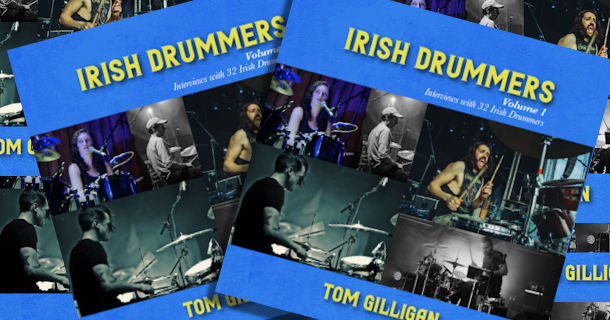
Order Irish Drummers: Volume 1
Irish Drummers is an insightful publication into the people behind the drum set. A joy for any music enthusiast (and everyone else).
Welcome to Irish Drummers
This site exists is to showcase the talent and creativity of Irish drummers through the years. The great contribution that this band of musicians have made to Irish culture and music throughout the world.

Welcome to Irish Drummers
This site exists is to showcase the talent and creativity of Irish drummers through the years. The great contribution that this band of musicians have made to Irish culture and music throughout the world.


Saturday, 30 July 2016


Friday, 22 July 2016

Thursday, 14 July 2016
Binzer
Brennan is one of Ireland’s most respected and accomplished drummers. On the
night I interviewed him, at McGettigan’s in Galway City, the Germany / Italy
Euro 2016 match was in full flow and it was going to penalties. Game On.
Tom: Who are your drumming influences?
Binzer: I was
obsessed with drummers like Ian Paice from Deep Purple and John Bonham. Then as
I got further into things like trash metal, I saw bands like Slayer and
Metallica. I hate to say it but Lars Ulrich influenced me at one stage
but definitely Ian Paice and John Bonham. Then as I kinda got into the singer
songwriter scene I started playing with The Frames and venturing away from the rock
scene. In 1993 Steve White and Paul
Weller became a huge influence on me.
Tom: What did you learn
from Ian Paice?
Binzer:
Ian Paice is well known for his rudiments and I’m brutal at rudiments. I kinda
skipped that you know, with a brutal left hand, but yeah things like the one stroke roll, Space Truckin and stuff like that is just mind blowing, so I suppose even
before I had a drum-kit, I used to air-drum along to songs like Burn.
Tom: When did the drumming
bug hit you?
Binzer:
It hit me pretty immediately actually. It was about the summer of 86 or 87 and
a neighbour I didn’t know very well, was
locked out of his house but he was living in his garage and he had a drum-kit
in the garage and I would call up to him every day and after that I was just
obsessed with it. I got a job in a petrol garage for about a pound an hour and
I saved every cent I had and then I got a striker drum-kit for about 300 pounds and that was it, everything else was
just school at the back of the corner and hitting the drums.
Tom: Was playing drums and
being involved in music your preferred option?
Binzer:
I never had a career plan to be honest with you. I suppose I definitely knew
coming up to the leaving cert that I was only interested in music and being in
bands and that kinda thing and when I finished school I ended up going to the Ballyfermot rock school. It was the only post graduate leaving cert course and that
lead on to just meeting other people from various parts of Dublin you know some
musicians who were in Kila at the time but they were just saying that they were
joining this new band with this fella Glen Hansard and that they were looking
for a drummer, so that was the beginning of me really starting in Dublin City
because up until then I was just practicing with some bands who were pals at
Temple Bar, rehearsing all day.
Tom: So the Frames were
your first professional band really. How did you approach going into the studio
for the first time because it’s different to playing live?
Binzer:
Well we were very well rehearsed. You spend all your time putting it all in the
rehearsal room and not in the studio room. You know it was like 15 quid for the
day. I would have been trying to get things right in the first take. It was
more trying to prove myself. There was something precious about getting it
right, in the first take and at the time as well playing with a click track was
very much in mode. I was always trying to get things done in the first go.
Tom: The album I suppose
that really shot you to prominence was Fitzcarraldo . That’s a really a ballsy
album from a drumming point of view. There’s a lot of work there, was that a
conscious thing, did you go into it and say, I’m going to make a statement
here?
Binzer:
No, what happened was that John
Carney, the bass
player, of Sing Street fame left the band and
the rest of the lads left it up to me to find a new bass player. So I found
someone through friends who knew him, it was Brian Downey’s son from Thin
Lizzy – Graham Downey. So
I got Graham involved
and he played a fantastic bass and he was very
much into groove, whereas John was into slap bass and stuff like that, so he
was very much into bands like Massive Attack and we would play loads of Massive
Attack grooves. So
Graham and I noticed the chemistry that we had and the songs would always come
together very quickly and we certainly noticed there was a lot more room for
the groove section but I think we as a band as well were so young, filling
every bar with music and we kind of matured after our first album. So a lot of
the things were influenced by the Pixies. We kind of took that template, a lot
of the verses were the drums and bass and then the whole band was grooving.
Tom: Was Stewart Copeland
an influence?
Binzer:
I certainly liked what Copeland did and went through a phase of his music but I
never wanted to emulate him but I may have been influenced by him. There were
an awful lot of Dublin drummers and one of those was Craig Hutchinson from Lir
and he was a big influence on me. He used to do a lot of hi-hat work and I used
to go to every Lir gig possible. The Frames and Lir were great friends but he
was very much influenced by Reggae. His favourite thing I suppose was Bob
Marley. So I could have easily picked it up.
Tom: The Fitzcarraldo
album was really your calling card. What happened after the 3rd
album?
Binzer:
Fitzcarraldo was a long period. We were
rehearsing every day trying to put things together but it was more about what
we were creating in the room. It was more of a healthy environment and so then
what we did was beg, borrow and steal to make money for the album and get it
signed. We kind of toured it twice, recorded twice but by the time we got to do
that we were kind of sick and tired of it and had kind of moved on. By the time
we were with ZTT records, the album was ready to be pushed out and that ship
had already sailed. We wanted to do
something different. As I said before we were always very well rehearsed going
into the studio whereas this time round we had some half baked ideas, a bit of
a tune here, a bit of a riff there and try and create in the studio and it just
became really tiresome and I think as well that traditionally recording it was
always bass and drums first and we laid the foundation there and then. The top line was put down on top of that
because we were so undecided as to what we were doing with the songs. Okay so
that’s the arrangement and nobody was willing to commit because once you
committed to that, that was it, that was the way it was meant to go. We weren’t
used to doing it in a different way so to be honest I kind of got a bit bored
and it just wasn’t happening and it wasn’t quick enough for me.
Tom: Did you feel it was
time to move on?
Binzer: I was beginning to feel like I don’t
fit in here anymore because I was always a good player and I could play but it
would take a load of takes to get it right but I found when I’d do a take they
would say “will you try it a different way” I was beginning to feel conscious
about my playing as well so I decided to get out and just gave up drumming for
a year and I became a landscape gardener. I didn’t pick up a pair of sticks for
ages and then I got a call from Mundy and he was having difficulty in his band.
I went to London and did some production
and recording. I just totally spread my wings and went everywhere and anywhere
while playing with Mundy, BellX1 and also with the Classic Beatles. I was
playing with lots of bands and I wondered why I didn’t do this years ago. I got to learn so much at
this time. I was rehearsing with Mundy
and he is quite rock and roll. Then I played with BellX1 but they had a totally
different approach, they would be using monochords and weird instruments and
looking for me to recreate drum machine type things. One of my favourite
drummers is Paul Noonan, the singer from BellX1. He doesn’t approach songs from
a drummer’s point of view. Another favourite drummer of mine is Conor from the
Villagers, he’s a fantastic drummer. The drums are mighty and I think it’s
because of the different approach and point of view because he didn’t grow up
listening to Ian Paice and John Bonham like I had. They just approached it from
a very unorthodox kind of angle and I love that because I constantly learn from
it.
Tom: What would you say
are the differences in your own music now compared to earlier in your career?
Binzer:
In the early 90’s I was very conscious
of playing too simply and it’s such a stupid attitude to have because it’s
almost like I had to prove myself in every song, prove how good I was. It would
be great to come up with something that really suits the music. “50 Ways To Leave
Your Lover”. That drum beat totally suits the song. It’s a lovely moving
pattern and to the average drummer they would think it’s too easy but I suppose
the biggest difference was just maturity, that classic phrase. It’s funny, how
even watching Graham (Hopkins) play Fitzcarraldo. Graham plays a much more simplified
version of what I did and I think that’s just because how he as a drummer, has
matured.
Tom: In the studio, everything is captured in the
moment, is that a torture for you, to come back to tracks thinking I should’ve played
this or I should’ve played that?
Binzer:
No I don’t think there is any point torturing yourself over stuff. I would have
years ago, again trying to prove stuff to myself. I would have been thinking I
could’ve done it so much better but then there’s just the certain amount of
acceptance that comes with it. It’s the difference between being comfortable
and laying it down with confidence as opposed to trying to shoe horn for the
sake of it. You can dance with a drum beat but you can’t dance with a drum
fill. You just have to look at the bigger picture and get the groove right
Tom: What’s the best
advice you could give someone that is starting out in music now?
Binzer:
My advice would be play, play and play and say yes to everything, I mean I’ve
been in so many positions where I was in a band that would ask me to play with
them and I wasn’t mad about the stuff and I remember thinking, will I, won’t I
and things like that. But I just did that and we ended up doing one gig and
after that gig as I was pulling my gear down the stairs I met someone who I
grew up with. He was telling me that he was very much involved in music and
that he taught music in college. He said that he wrote a book about theme influence
of modern music and that he was looking for a drummer . I started doing a
session with him and I ended up working with his brother who was a producer. All
of this happened just because I said yes to that one gig. But of course you
shouldn’t do something that you can’t stand but I said yes for the most part.
Tom: Do you play drums by
ear or by reading?
Binzer:
Yeah I was never really a reader. I tried the reading thing. I could really put
the head down and knuckle down but I think maybe if I was in a jazz circle or
orchestral circle I could read but for the most part I play by ear and I make
my own notes so no one else understands them except for me. The odd thing I
might write out like the beat but sight reading is the kind of thing you would
have to practice every day but I would much rather playing the drums rather
that reading a book.
Tom: When you’re playing a
song do you always have a definite beat in mind?
Binzer:
Well I would never put down someone’s idea and say no that’s wrong or say
that’s not going to work because there are no rules in music. I would be open to other ideas. I was fine for
the most part I would play what I had in
mind and end up pairing that whole thing back but in relation to going down the
road altogether and doing work I suppose maybe there has been a time where you
feel it works really well. I would always accept they have a vision, as to how
they want it.
Tom: Tell me about your drum
gear?
Binzer:
I became a big fan of vintage retro drum-kits a long time ago and I’ve got a
bit of a collection now. I came into vintage drum gear about 15 years ago and I
got very much into reconditioning them. I would do wraps and take them apart
and put them back together and all that. It’s funny, the Olympic that I’m using
tonight I’m using it all the time. I got a vintage drum-kit from a friend and
he was talking about the Rolling Stones and AC/DC and he said look I have a
drum-kit I bought when I used to play drums. The drum-kit just wouldn’t work, it was
killing me, I just couldn’t control it and then I had another session the next
day in the studio and I said I’ll get this kid sounding good and I had worked
with it the night before and it was beginning to sound better and I brought it
to be seen the next day and it got a quick tweak and I was just about getting
to know it. It’s a piece of crap really. I bought that for 100 quid about 20
years ago. I’ve always used cymbals. I
know I got them a long time ago when I was with a friend. I loved the K range.
The hi/hat size is 14. I did use 13’s at one stage. Graham (Hopkins) uses 16’s
but they were just a bit too big and breathy.
Tom: What songs would you recommend as your calling
card?
Binzer:
There’s one song and it’s a Gemma Hayes
song and she was playing the piano and messing around with this tune and I said
to her that’s lovely, have you turned it into a song or anything and I said
keep playing it. I jumped in behind the
drums and started playing. It was kind of jazzy and I started playing along and
she loved it. We just recorded it. It’s
on the video I have on BinzerOnDrums and there were no words to it. The name of
the song should be in the list as well. So I’d recommend that and in relation
to my rock roots I would recommend something from Little Matador .
Tom: Have you noticed a change in the drumming
scene in the last few years?
Binzer:
I think drums are a lot more accessible. I notice there are more music shops in
town opening up. There doesn’t seem to
be any decline in people buying drum kits. My son is playing drums now and he
got a kit, which I got him for Christmas. I think the level of drums and choice
of drums is just so different.
Tom: What makes Irish
drummers different to other drummers?
Binzer:
The American drummers are very well trained in relation to rudiments. I suppose
the one thing I would say is the American drummers always have to get the rudiments
right. When I was touring the states
before and I remember there would be a local band that would roll up and you
would see the drummer sound checking and you would say oh my God he’s amazing
and the bass player is going to be fantastic. Then they would play together and
they would be absolutely terrible. They would all be out doing each other. It’s
like what they’re saying about Irish
sports people just playing with a bit more heart and not trying to be
technically perfect just trying to put a bit more heart and soul into it. It
does actually mean something when you play something and really mean it. It’s
almost like when you’re a singer and you sing something you believe in as
opposed to someone who’s just trying to get their notes right or diction or
phrase right or they’re concentrating too much on the technical end. Where as
you can be bang out of tune but if your delivery is heart felt you can convince
so many more people to listen to you as opposed to being pitch perfect.
Tom: What’s the 5 year
plan?
Binzer:
Well I suppose I want to get this up and off the ground (Brass Tacks) and I
just want to keep playing and get better. In relation to having a plan I always
panic and think oh God I need to change my career. I have a wife and two
children and a house. I need to be doing the exact same thing I was doing in
1991, just drumming but I’ve managed to make a living out of it now. There’s a
lot of people I’m beginning to work with like Rob Kirwan who produced the Hozier
record. I get a lot of calls from him now and a lot of people would send
developing artists over to Ireland to work with him. When he wants to put a
band together I’m the first person he calls. So in relation to what’s my 5 year
plan I don’t really have one. I just go
with the flow and one thing will lead to another so I just keep saying yes and
more opportunities will keep popping up. Even when you’re in a band you can
rehearse and rehearse and rehearse or you can go out there and do it in front
of people and either fall flat on your face and go back to your rehearsal room
or just stay in your room and never get anywhere.
Monday, 6 June 2016
Sunday, 22 May 2016
Recently I came across a great compilation album of Irish artists. It was interesting to note all the great Irish bands that for one reason or another are no longer big players of the music scene. Bands such as Candy Apple Red, The Coletranes, An Emotional Fish, Energy Orchard, Shaine and Peach all sounding brilliant and essential.As Jack Welch would say a murderers row of talent. Just to say Thank You for the Music.
Thursday, 30 July 2015
So much for the summer. It’s
the 9th of August 2014, I’m driving through Limerick City and I can
honestly say I haven’t seen a downpour like it in years. It’s that bad that the
wipers on my car can barely handle the torrent of water cascading from the
heavens. Normally, I wouldn’t be out in weather like this, but I’m on my way to
interview a certain Irish drummer that is playing with the legendary Irish
band, Horslips. As I’m sitting in my car, outside Dolan’s, waiting for the rain
to subside I’m really looking forward to interviewing one of the most respected
and talented drummers that this small island of ours has produced and that is
Mr. Ray Fean.
Tom; How
did you get started?
Ray; I always had a deep passion for music. I
got started for a number of reasons, traditional Irish music. I love music. My
brother John played in Horslips. I had in effect music around me all the time.
Musical household, I naturally equated towards rhythm very easily. As a child I
had no doubt of what I was going to do, I was going to be a drummer.
Tom; Who
were your influences starting off?
Ray; First of all, I was very influenced by
traditional Irish music and its rhythm because the rhythm is in the melody. I
was listening to everybody but I mainly grew up listening to Frank Zappa,
fairly wild stuff, which I thought all the kids were listening to, but of
course they weren’t. It was a very diverse musical household in that respect.
So it was Coltrane, it was Jazz, it was everything.
Tom;
Did your influences change as your career progressed?
Ray; I managed to do with the stuff I started
with, which was an uphill challenge with the idea of listening to, I don’t
know, maybe “Apostrophe” by Frank Zappa and the odd time signatures and stuff
like that. First thing I learned was probably time signature.
Tom; Were
you self taught or did you take drum lessons?
Ray; I taught myself for the most part but I
had the great pleasure of going to Johnny Wadham. Now I was fourteen, I was
smoking, drinking exotic tea. We were listening to the latest Buddy Rich album.
I was taking notation and I just felt like a rock star, it was fantastic.
Tom;
What advice would you give to drummers starting off?
Ray; I’d say it’s hard work, and you better
buckle up. The one thing you’ve got to do is you’ve got to get good at what you
do. I knew I’d have to practise and practise. It’s not easy. You don’t know
exactly where the next gig is. Once again, practise, practise, practise and
you’ll get really good and you should have that to fall back on like when you
go out playing, and you’re sitting there, looking at this, hearing this, you
don’t know when by chance you’ll be asked to do a session. There’s only one
reason that happened and that’s because you’ve practised for it.
Tom; How
much natural talent does someone need?
Ray; I played the bodhrán, I picked up sticks
for the first time, I played it straight away, drums straight away, it was no
problem, I’m a drummer. I was born a drummer and everyone in the household knew
that, but you’ve still got to practise because when you’re a born drummer and
you play, you have to be yourself. You develop something to push yourself out,
lots of things that you need to learn, playing with click tracks and all that
kind of stuff. These are all vital when it comes down to it. I knew what the
road was ahead but I was lucky because I had people around me and that’s why
I’d be glad to bestow any information. It doesn’t matter how natural you are.
To keep your natural stuff you’ve got to work on it. Plus, practice is great
enjoyment, and every professional would recommend it.
Tom;
You’re playing with Horslips now, it’s certainly a great gig, a great band,
when you approach a gig like this, do you go into it and say, I’m going to
listen and replicate what was done before”, or do you say,” well I’m going to
put my own Ray Fean stamp on this sound”?
Ray; That’s a good question because you do
have to listen to what has gone on before because the players that are around that situation are used to something
so consequently when you arrive in and start adding in all these other things
or playing completely differently it kind of upsets the position of the music.
There are reasons for that, the accents that are in place, the very way it was
played, there’s a reason for that as well. So all these reasons are in place
and you have to come to terms with doing that. If you’re in a situation where
you add your own flare, then so be it. Bringing in to Horslips, that’s one mask
or hat, so to speak, and Riverdance, that’s another hat, and Celtic Woman, that’s
another hat and these all react entirely to what you have to do. Do you play
parts so you can style a gig the way you play? You have to be careful how you
style the parts and if you want to try something out and the musician says,
“Ya, give me that”, then great. Coming in with all these big ideas, it doesn’t
work.
Tom; So
when you’re in a session and you’re approaching a song, what’s the thought
process behind deciding what to play?
Ray; The thought process for the actual song
itself, fundamental elements are important and are entirely up to you. It’s
something that you need to listen to. You know what your job of work is, you
know the time signatures. You need to come in to the studio. If you’re
fortunate enough you get a set of ideas of how you would approach this. If the
singer or the producer doesn’t have an idea, then you start giving out the
ideas and this is how you do that. You get inspired by the song, through its
feeling, inspired by the song through its rhythm, even if it’s not anything
other than, let’s say, two up, two down, country. You’ve got to put your heart
into the lyric of it, put your heart into its soul. If you can get far with it,
brilliant. What it comes down to is your feel and understanding, your time
signature, understanding the actual dynamic of what’s needed, like you’re not
driving a thumb tack with a sledge hammer. Do you know what I mean? You don’t
go in to a jazz gig with massive sticks. You feel that and you suss it out. The
way to do that is to listen to what the track is, so you practise your routine
again, like your routine jazz, your routine country, all these
different things. You understand the vernacular and when you get in to the
studio you understand that it’s a country beat and how to play that and you
listen to Larry Londin and you pick up the pieces.
Tom;
Thanks Ray that’s really fascinating. As a matter of interest how many drum kits
do you have?
Ray; I’ve got kits here, kits in the States,
My own personal amount? about six kits.
Tom; If
you were asked to choose songs from your career thus far, that best represent your style and that you're most proud of, what would they be?
Ray; Let’s go from the first album, so “Cut
and Dry”, from Shibumi. There’s a great album I did in Bulgaria, “Rest in Peace”
and we did mad stuff out in Bulgaria but that won’t be heard, unfortunately,
it’ll never get out of Bulgaria. Another one was any of the Coolfin tracks
really. I think after that then playing with Ray Lynam was brilliant. We did a
great album that never got released so that won’t be heard either. “Twisting
and Turning” was a track we did, written by Kieran Goss and that turned out
fantastic and that was my introduction to Donal Lunny, through Ray Lynam. We
all know he was phenomenal. And then I suppose another choice would have to be
from the “Dan Ar Braz” era. That was great. The technicality, I love. I love
its challenge. Being able to make certain progress, to pull it off, so to
speak, but a good song does it for me. I play a really good song. It does it
for me more than anything else. You can listen to crazy drummers who are
fantastic and brilliant, but I find, with me, a good song to listen to is
important.
Tom; When
you listen back to tracks you recorded years ago, do you look on it now and
say, “I wish I had done that differently”? Is there always that kind of
self-analysis that goes on?
Ray; I suppose. First coming out of the
studio after doing takes, breaking down the higher beats and all that kind of
stuff, “Ray, it’s fine, go away”. While I’m in there I’m a terror, it’s awful.
Generally speaking, there have only been a few things that I wish could have
been better but the self-analysis or the analysis, per say, in the studio on
the ground, I have to do that and that’s the time to do it. You can, you know,
if people are happy with the take and it actually is fine, walk away. Don’t
overdo it, because I went through a phase of self-analysis in the studio and it
went on too long. Actually freeing yourself from playing the part, listening to
it, “do we need to fix that?” fixing it, just walk away. It’s an obsession
because that stuff sort of slows you down as a way of life. Sometimes I listen
back to things and say, “oh, that could have been better”, ya absolutely but I
wouldn’t harp on about it, I wouldn’t focus on it because you would drive
yourself crazy.
Tom;
Which do you prefer, playing live or studio?
Ray; I love the wildness of the live thing. I
love the expression of wild but I love the discipline of the studio. I love its
challenge, its achievement. I love its result and the fact that it’s going to
be there forever. Live has its advantages over recorded but a good recording is
a great thing to have achieved and to be part of a team. I love the whole ethos
and everything about it. I love the studio behaviour. It is quite academic but
there’s nothing like nailing it down with a team of people back into the
control room. Big studio rooms when you’re in with everybody, it’s not daunting
at all but I can understand that you’re going in to these halls for the first
time. For any new drummer it can be quite nerve wracking. What I would say
before you go in to that room is that you have that click track with your body,
with your sync, with your motion with everything. You are the click track when
it comes to playing so playing in time is really important, you know.
That’s the one thing that’s going to earn any drummer when you get in to a
studio situation is a click track. If you can’t keep within a click then
everyone else is doing it in line with the click track, so that’s what you have
to practise, that’s where the practise comes in. I know I keep harping back to
practice but it is fundamentally important.
Tom;
How important is it to practise the rudiments?
Ray; Rudimentary for me, I do find it awful
boring. I mean for me, I understand what the importance of it is and I think it
is very important if you don’t have the discipline I think. But with the
rudiments I practise and I still keep practising. It is the flow of how your
body moves, your conversation between your hands and your feet so rudimentary
stuff applies to paradiddles and all that sort of thing. When you’re playing along and you have a flow to a song and that’s
something that you really have to kind of think about because rudiments give
you a certain amount of square aspects to it. There’s no curve in it, you know,
there’s no kind of like if you’re playing rock or you’re playing jazz or
whatever with all the parts going on, the feeling you get when everything is
moving along and you have this kind of chug in your system. Even when you stop
playing you still feel the rhythm. You know, it’s like dancing. It’s like river
dance. It’s like Latin. It’s the flow of the whole thing. That’s my rudiments.
That’s what I think is the most important part of it, as a flow.
Tom; Being
on the road with a band, how do you keep yourself fit and how do you keep your
body in check?
Ray; Discipline. The thing of it is, it’s not
a party, it’s a gig. You know why you’re there and don’t forget it. There are great
times on the road. We love our gig years coming up with Celtic Woman, a night
out and we would have a conversation and we would have a nice bottle of wine, a
meal and we’re all sitting around and we’re talking about everything and we’re
talking about the old days. That’s my love of the outside world but the gig is
the most important thing and you’ve got to keep that bit in mind at all times.
You’re walking out in front of people so there’s no messing with that. Unless
you’re doing your own thing, unless you’re actually making your own music,
you’re out there in the world, employing other people but when you’re employed
as a bass session player or whatever, it’s about discipline absolutely. Be on
time, get out of the hotel on time, you know. It’s not just about the drums,
it’s how you communicate with everybody, like you say what the teamwork is. The
teamwork is down to how you get on with the crew, how you get on with
everybody, you know. You don’t want to be Mr. Nice Guy but Mr. Respect, to have
respect for other people. That’s what lasts, especially where you’re on a bus,
like the last one we did was four and a half months so you better get on with
each other, you know. Generally speaking, it’s been great so far. This place is
great.
Tom; What I’m focusing on with these series of
interviews with Irish drummers is what makes them unique as opposed to other
drummers?
Ray: That’s a good question and you’re
absolutely right. I think it’s to do with our folklore. We’re innately, as a
nation, rhythmic. We have massive background in our tradition including
everything from our arts to our literature. Our music, in particular, it’s very
rhythm based and I think before you even pick up a stick you’re in the Irish
style. You know, once you start drumming, although you might be a rock and roll
drummer at the start as much as I was a rock and roll drummer, the cost of it,
the thing of Irish traditional music around me was rhythm for that. It equates
effectively to what it would be, like Latin America. We have our own Latin
America. We have our own style here and I think we have that fundamental thing.
Some countries don’t do it. We’ve got it in our blood. We have it in our
system. Drumming is, whether you’re singing or you’re dancing, you know, it’s
all rhythm; it’s all about the rhythm all the time. So like I said, once again,
traditional Irish music, the rhythm is in the melody so you hear that
syncopation and you know, you play along to it. So it’s all there, that’s the
melody as well. So I think we have an innate understanding which is great. The
next place we’re going to is Sapporo, so in Brazil. Ya, that’s where Celtic
Woman is off to next, so it will be interesting to see what the Latin Quarter
has to offer.
Tom: How
long has the Celtic Woman series been going for?
Ray: A solid ten years. We’ve done numerous
DVDs and videos, great challenges and some great moments, great memories like,
you know, live gigs. Sorry, the DVDs, it’s always been a challenge, always a
pressure. The pressure is always
there but it’s a fantastic gig.
Tom: It’s
a great achievement. From your own point of view Ray, what’s the next five year
plan, drumming wise, what’s the challenge?
Ray: Well, I’m fifty two in September so what
I would like to do is, I need to get into a room and start really beating the
shit out of it now because as a cardiovascular workout but I would love if it
was like four or five months next after going on a break with Celtic Woman
where I could play my guts out when I did when I was like fourteen, just feel
that right now. It would all be about flash and prowess, delivering and writing
and so but I mean I’m very much a writer now as well. All the Killinaskully
stuff, you know that. That was thirty eight episodes. A lot of songs and stuff
as well and I’ve gone for a publishing deal with it. So there’s a lot of song
stuff going on there but I do want a place when I can just get physically into
it. I want to call to the guys in power, get a kit over soon and I’m going to
start doing it again. I’ll maybe get some clinics out, ya, something like that.
Let’s see how I get on. Ya, that’s next week. Of course it’s the gigs, the
tenth anniversary of Celtic Woman and there’s lots of stuff going on.
Tom: What’s
the future for Irish drumming? You had the 70s, 80s and 90s where things were
progressing. Irish artists are going to find it harder and harder to get out
there now.
Ray: Ya, I know what you mean. Drums were a
part of something. You look at Lizzy, you look at all the different bands,
drums were a very big part of it. You felt part of something. I think in those
eras your contribution was all there. I think it’s still there, it’s just going
through a phase. We’re not seeing it at the minute but having said that,
there’s a technological storm going on here. It’s like a meteorite at the
moment. There’s so much technology, there’s so much computers now. It will find
a street. It will get back eventually. Drumming will always remain the same as
folklore. It will always have its future in that respect. How we react to it is
really down to, well ok, I’ll pitch it like this, if you had the modern kit of
drums, then that would have been used that way. It’s all about what’s in front
of us next. Drums as we know are a fantastic kit. Made, to look at it, they’re
beautifully built; great sounds. I wonder what the next thing to hit is, like
you know, what is it going to be electronics wise, how will people react to
that, but I think it’s very hard to define. It gets remade. Let’s say, like the
great Brian Downey, ya everyone is who they want. Ya, I see your point. I
wonder if all that stuff is going to come back. I don’t know. It’s still there.
I still feel that. It felt like that with Horslips last night. I feel like that
about any gig. You have to be open. Like that flow we were talking about. You
really got to get into what you feel in it. It’s very computerised. There’s
nothing like playing the player, you know, playing the player is it. That’s all
flare. So we’ll see what flare is when it comes to that.
Tom: As
we’re talking about Irish drummers, is there anyone that’s currently coming up
on your radar?
Ray: I’m seeing stuff that I love. I can’t
name names right now, I’m sorry about that. I can see a style coming through in
ways I hope that remains. I’m seeing players that are playing really particular
styles. It’s great, with flash and you know flare and they’re comfortable with
what they’re doing. I would never be worried for the future of Irish drummers,
ever, ever. I think it’s always going to be there. I’m only a cog in all that
system but you know, I believe in it. I believe it’s going to get better in
some ways. We’re not seeing it right now but then again it’s not what it used
to be. You don’t have as many places to play. I think a lot of it is off the
beaten track. Many people are expecting it for free.
Tom; Is
it a case that people don’t appreciate music as much now?
Ray; I think people appreciate it usually but
they just won’t pay for it. It’s down there with all the other things, you know
what I mean? That’s what it has come to. That’s what music has come to. Live
around the world, I mean gigs and festivals. Now we’re busy at the moment as
well so.
Tom: How would you describe your own style?
Ray: Freedom. Freedom of expression. That’s
why I started.
Saturday, 11 April 2015

Subscribe to:
Posts (Atom)


